
For its whole life so far, SailorsLog has been a private notebook. Your passages, your photos, the track of every crossing — all of it lived on your iPhone, your iPad, your Mac, synced quietly between them and nowhere else. That was the point. A logbook is a personal record before it is anything else.
But a record that good wants, eventually, to be read. Family who track your crossings from the kitchen table. The friends who waved you off in spring and want to know where you got to. The sailor you met in a Danish harbour who asked, where can I follow your trip?
In v2.1, you can give them an answer.
A logbook of your own, at yourname.sailorslog.io
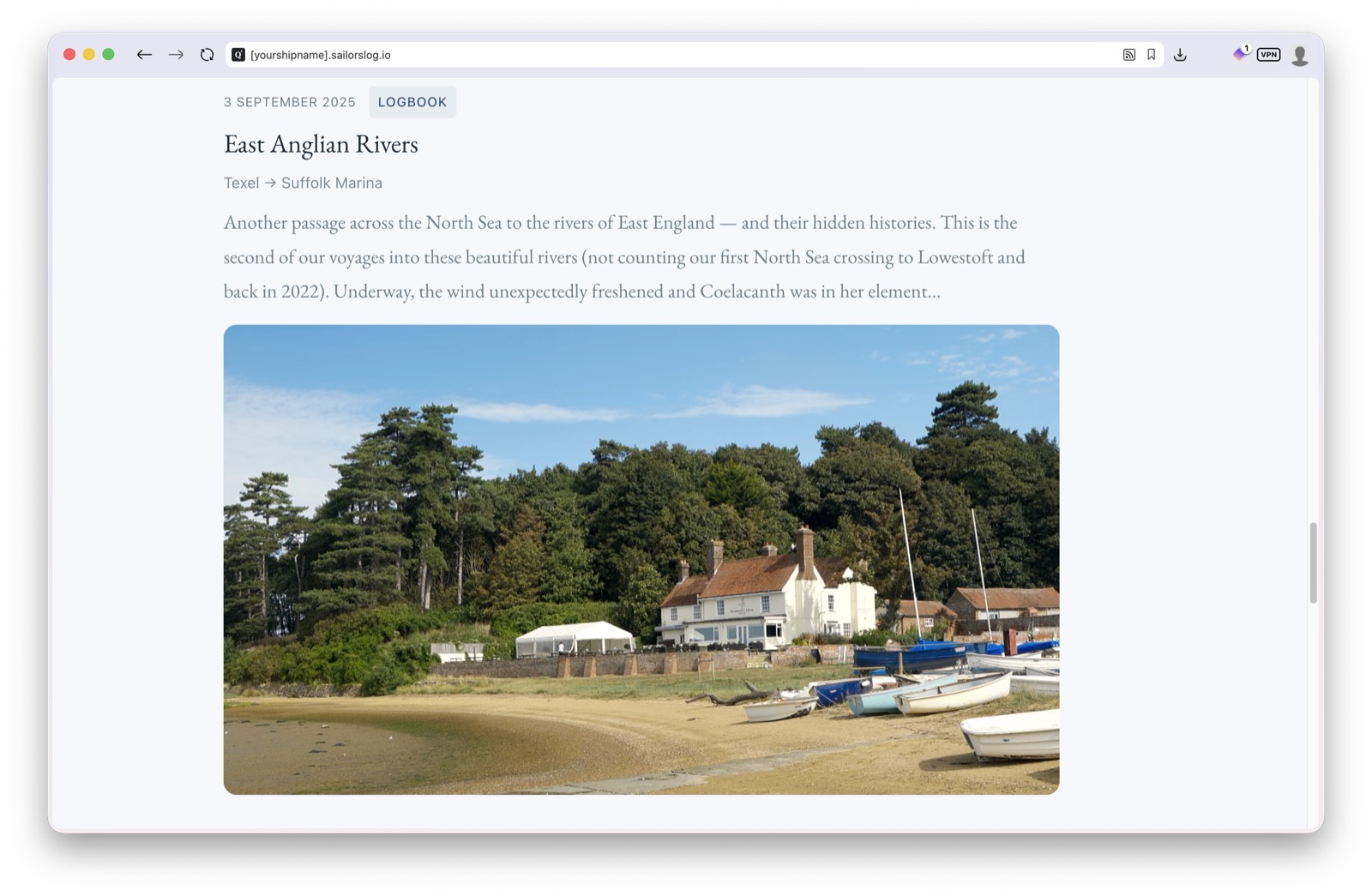
Publishing turns your logbook into a website at your own address — belami.sailorslog.io, or whatever name you choose. It’s not a feed inside someone else’s app. It’s a quiet, handsome site that is yours: your entries, your photos, your tracks, laid out to be read rather than scrolled past.
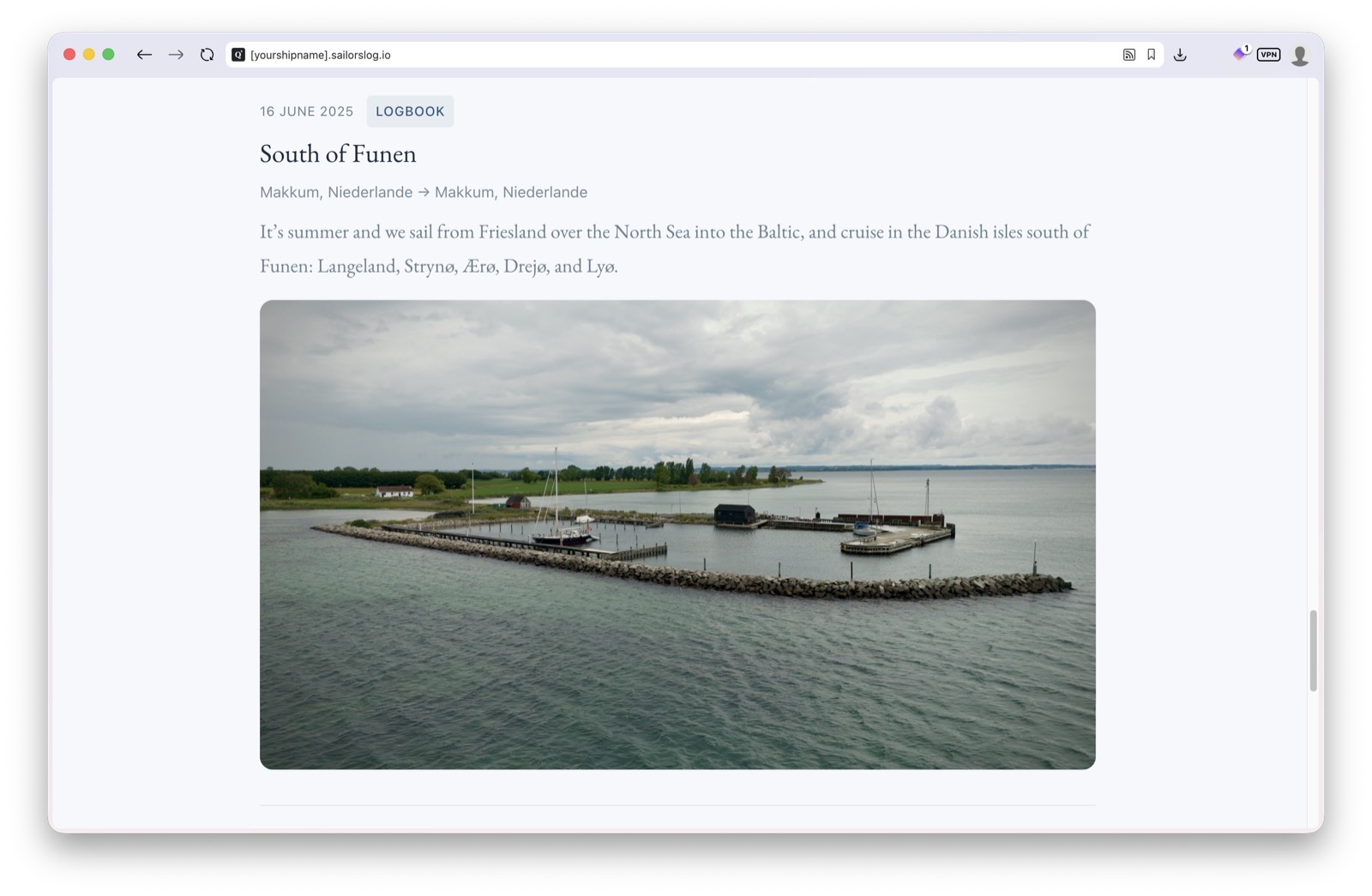
The pages are built for the way a passage actually reads. A date and a place line at the top — Makkum, Niederlande → Makkum, Niederlande — then your words, then the photographs at full width, then the track on a chart below. No clutter, no ads, no sidebar of other people’s boats. Just the voyage.
You decide what the world sees
Nothing is published until you say so. You write and edit in the app exactly as you always have, offline-first, drafts and all — and when an entry is ready to share, you publish it. Only what you choose goes to the web; everything else stays private on your devices.
The same goes for taking things back. Unpublish an entry and it disappears from your site; the original never leaves your logbook. Publishing is a window onto your record, not a one-way door out of it.
Built to be found, and to be kept
A published logbook is a real website, so it behaves like one. Each entry gets a proper page with its own title and description, so search engines can find your crossings and so a link shared in a message unfurls into something that looks like care rather than a bare URL.
There’s an RSS feed, too, for the readers who’d rather follow quietly from a reader app than check a site. And because the pages are plain and fast, they load just as well on a phone in a marina as on a laptop at home.
How it works, briefly
The web layer renders your pages on demand from the entries you’ve published — there’s no build to run, no deploy button to remember. You publish from the app; a few seconds later the site reflects it. Photos are uploaded once, resized and served from a fast image host, so a page full of pictures still opens quickly. The address is yours to claim, and yours to keep.
If you’ve read the earlier dev-log entries, you’ll recognise the shape of this: the same offline-first record that syncs between your devices, now with an optional public face. The private logbook is unchanged. The web is something you add to it when you’re ready.
Hoist the sails
Web publishing is part of the new Captain tier — everything in Skipper, plus your own published logbook at yourname.sailorslog.io, a custom subdomain, SEO, and an RSS feed.
Open SailorsLog, choose a name, and publish your first passage. Then send the link to the people who’ve been wondering where you got to.
Fair winds ⚓️